Imagine trying to empty a bucket of water into an already overflowing pool. That’s what it’s like for homes, schools, and industrial complexes in areas with high water tables. The ground is so saturated with water that traditional drainage systems, like soak pits or sewage lines, can’t handle the load. Instead of efficiently draining away, water tends to accumulate, creating persistent flooding and dampness. For industries, this means soggy foundations, structural instability, and even disrupted operations. It’s not just an inconvenience; it’s a constant battle with water that regular drainage methods simply can’t win. This is where specialized solutions like Wisconsin Drains come in.
What are Wisconsin Drains?
Wisconsin Drains are a specialized drainage solution designed to handle high water table areas where traditional systems like soak pits or sewage lines fail.
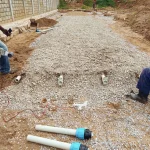
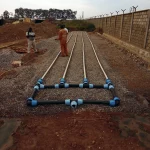
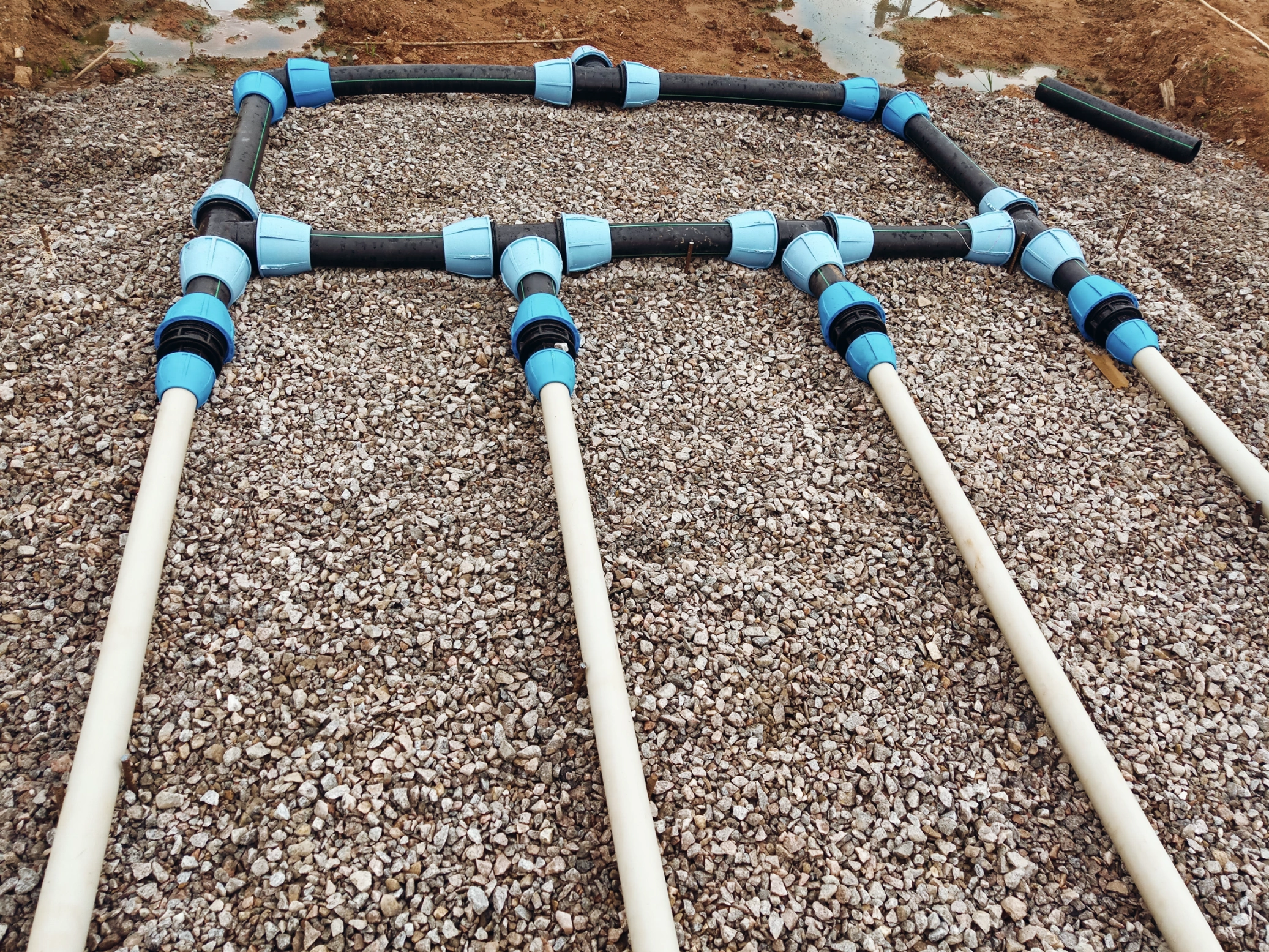
Originating from Wisconsin, USA, a region known for its challenging groundwater conditions—these drains work by creating a network of trenches filled with gravel and perforated pipes that direct excess water away from the soil. Think of them as the veins of an industrial park, helping “bleed off” excess water that would otherwise find its way into warehouse floors, damaging the structure, machinery, and even the produce.
Without this drainage, the water could flood foundations or weaken structures (a problem we’ve covered previously in our article on Damp Walls). Unlike standard systems, Wisconsin Drains are engineered to handle heavy industrial loads while ensuring long-term functionality in waterlogged areas.
Where are Wisconsin Drains Used?
Wisconsin Drains are versatile and uniquely suited for handling drainage issues in challenging environments. Here are some specific usage scenarios where they shine:
1. Low-Lying Industrial Parks
Areas like Namanve Industrial Park face persistent waterlogging due to high water tables. Traditional drainage solutions fail, leading to flooding, structural weakening, and damage to warehouse floors, machinery, and stored goods. Wisconsin Drains efficiently redirect excess water, protecting industrial setups from costly damage.
2. Heavy Rainfall Zones
In regions where heavy rains frequently overwhelm drainage systems, Wisconsin Drains provide a robust solution. Their design ensures that large volumes of water are quickly evacuated, preventing water from stagnating and compromising operational areas.
3. Soil Stabilization in Construction
Before construction begins in areas with soggy or waterlogged ground, Wisconsin Drains help stabilize the soil by removing excess moisture. This creates a firm foundation for buildings and machinery installations.
4. Flood-Prone Areas
In locations susceptible to seasonal flooding, Wisconsin Drains act as a first line of defence, minimizing the risk of water entering industrial facilities.
Common Mistakes in Industrial Drainage Construction on Soggy Ground
Building in areas with high water tables, like Namanve Industrial Park, presents unique drainage challenges. Many industrial projects face setbacks due to these common mistakes:
1. Ignoring the Water Table During Planning
Some builders overlook the high water table during the design phase, assuming that traditional drainage systems will suffice. This often leads to flooding and structural problems, which are costly to fix later.
2. Overreliance on Traditional Drainage Solutions
Many contractors install standard soak pits or sewage lines, which are simply not designed to handle the sheer volume of water in these areas. The result? Persistent waterlogging and ineffective drainage.
3. Poor Quality Materials or Construction
In an attempt to cut costs, some builders use substandard materials for drainage systems or opt for makeshift solutions. These are prone to failure under the pressure of heavy water volumes.
4. Failing to Regularly Inspect and Maintain Drains
Even the best drainage systems can fail without proper maintenance. Debris build-up, for instance, can clog drains and render them ineffective in emergencies.
5. Improper Installation of Wisconsin Drains
While Wisconsin Drains are a robust solution, they must be installed correctly. Poor installation can compromise their performance, leaving facilities vulnerable.
These mistakes not only compromise the efficiency of industrial facilities but also lead to financial losses due to structural damage, machinery downtime, and ruined products. To avoid such pitfalls, always engage experts who understand the complexities of drainage in high water table environments.
Insights From the Field
One of our most eye-opening experiences with Wisconsin Drains happened at Kawacom’s industrial facility in Namanve, where the regular drainage systems had completely failed because of the high water table. Our client was struggling with wastewater that had nowhere to go. It kept resurfacing, created foul smells, and threatened to damage both the structures and daily operations.
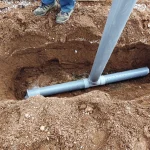
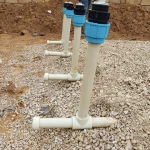
After properly designing and installing a Wisconsin Drain system, everything changed. The system used a network of small pipes laid in sand and gravel, with each pipe spaced according to calculations that prevent water from pooling at the outlet points. The effluent pump played a key role by pushing wastewater evenly through the network. As the water passed through the sand and the active biological layer surrounding the pipes, impurities were broken down naturally. In simple terms, the system worked like a natural filtration plant hidden beneath the ground.
When we tested the discharged water at Kawacom, the results surprised everyone. The water was clean enough to be considered potable, with only nitrogen appearing in higher concentrations. This may have been partly due to the nature of the client’s operations, since coffee waste streams typically contain elevated nitrogen levels. What seemed like a concern quickly became an unexpected benefit. Wherever the filtered water passed, the vegetation became noticeably lush. This highlighted the potential for such systems to produce a nutrient-rich liquid fertiliser, especially for coffee processors who may see this as an additional revenue opportunity.
Another advantage is that these systems can be constructed above ground when the water table is extremely high, making belowground installation impractical.
Experiences like these have shown us how reliable Wisconsin Drains can be in challenging environments, particularly in low-lying areas where traditional drainage options simply cannot cope. They can serve homes, schools, hospitals, and industrial facilities with impressive efficiency and long-term reliability.